This project aims to contribute to a better understanding of employee-organization relationship, which is critical for organizations to manage their workforce.
We aim to tackle an important societal challenge regarding how employees are treated, and this occurs following the UN’s report that the creation of quality jobs will remain a major challenge in the future years.

Perceived exploitative working relationships are not a problem of a bygone era nor are they confined to developing countries, but rather the recent pandemic spotlights how organizations are treating their employees as survival becomes the imperative.
At what cost?
Maria Grazia Giammarinaro (U.N. special rapporteur) reports that “the abuse of vulnerable workers – such as those deemed as essential – had increased “alarmingly” due to COVID-19, leaving many facing starvation and forced to accept exploitative conditions” (Reuters, July 30, 2020). Moreover, last year, the World Health Organization (WHO) and International Labor Organization (ILO) concluded that long working hours kill hundreds of thousands of people a year from stroke and ischemic heart disease. Combined with the increasing use of new forms of work, outsourcing, technology advancements, less legal regulation, COVID-19 has added fertilizer to ripening conditions for organizations to exploit its employees.
Consequently, this fast-paced and uncertain context coupled with the recent COVID-19 situation fuels a conductive environment for organizational mistreatment – organizations acting malevolently towards their employees in order to survive or thrive. One of these forms of organizational mistreatment is organizational exploitation. Drawing on seminal works in political economy and sociology, recent literature defines exploitation as employees’ perceptions that they have been purposefully taken advantage of in their relationship with the organization to benefit the organization itself.
Specifically, these perceptions of exploitation include: the organization uses and mistreats the employees, forces them into a contract that solely benefits the organization, does not compensate them adequately despite expecting employees to go to work at any time, does not provide job security and can dismiss employee at its convenience, uses employees’ ideas without asking or acknowledging and, does not care if it harms their employees. Such experiences and perceptions have the potential to undermine and erode employees’ attitudes towards their organization. However, less is known about its impact on employee health and behavior. This is particularly important given the implications of COVID-19 itself for employee health.
Exploitation is not confined to the past – it is happening today.
To solve any problem, we must first understand it.
Our project strives to do just that.

2. Quantitative Insights
While qualitative data is rich and detailed, it is also harder to generalize. After all, how can we be sure that the results we attained are not inherent to the small sample we had, and that we would not get different results with more people?
As such, we also conducted multiple quantitative studies to help us tackle our research questions. Additionally, we both manipulated and measured perceptions of exploitation in different studies, strengthening our claims and reducing the probability that the results found can be explained by sampling bias alone.
We collected data with over 500 people, across multiple surveys, with both experimental and correlational designs. Some of our more pressing results include:
-> If assigned to an experimental condition of “Low Exploitation”, participants will report that the given scenario is not as realistic as an “High Exploitation” scenario.
This indicates the general public does not believe there are realistic workplace environments devoid of many or all the elements we typically associate with organizational exploitation
-> Perceptions of exploitation are highly correlated with Thwarted Psychological Needs, Rumination, and Depressive symptoms...
…which unsurprisingly indicates that a higher level of these perceptions tends to co-exist with a higher level of all these other negative constructs.
If you wish to read more about all the variables at play in these quantiative studies, check our “Publications” page!
Some of our results include:
1. Qualitative Insights
We conducted in-depth interviews with healthcare professionals to uncover the existence of exploitation perceptions, as well as the recurring reasons leading to such perceptions.
Not only did they repeatdly mentioned feeling exploited, they also reported some overlapping reasons which may make them more susceptible to being exploited. Examples of these are:
Calling – A sense of “calling” makes it so these employees believed they simply had to do this job, which would then be exploited by their managers and organizations, seeing as they would not walk way
Contribuition to Society – A strong belief that their work was contribuiting to society also led these employee to overlook possible cues that their working conditions were suboptimal, to say the least. Because their work needed to be done for society to function, the needs of the many outweighed the needs of the few.
Loyalty – Organization loyalty, according to our interviewees, also meant their managers believed they weren’t going anywhere. As such, since they are not leaving, they would feel more confortable creating suboptimal working conditions.
Additionally, our qualitative data also led to the uncovering of two types of exploitation:
Relational
This type of exploitation focuses on the organization’s intentions, as well as the actions of organizational agents that embody and reinforce the malevolent organizational intentions.
Structural
Structural exploitation, on the other hand, captures the working conditions and human resources practices that sustain exploitative working relationships

Sounds intringuing?
Check out where we have published these results!
Don’t forget to check out research center
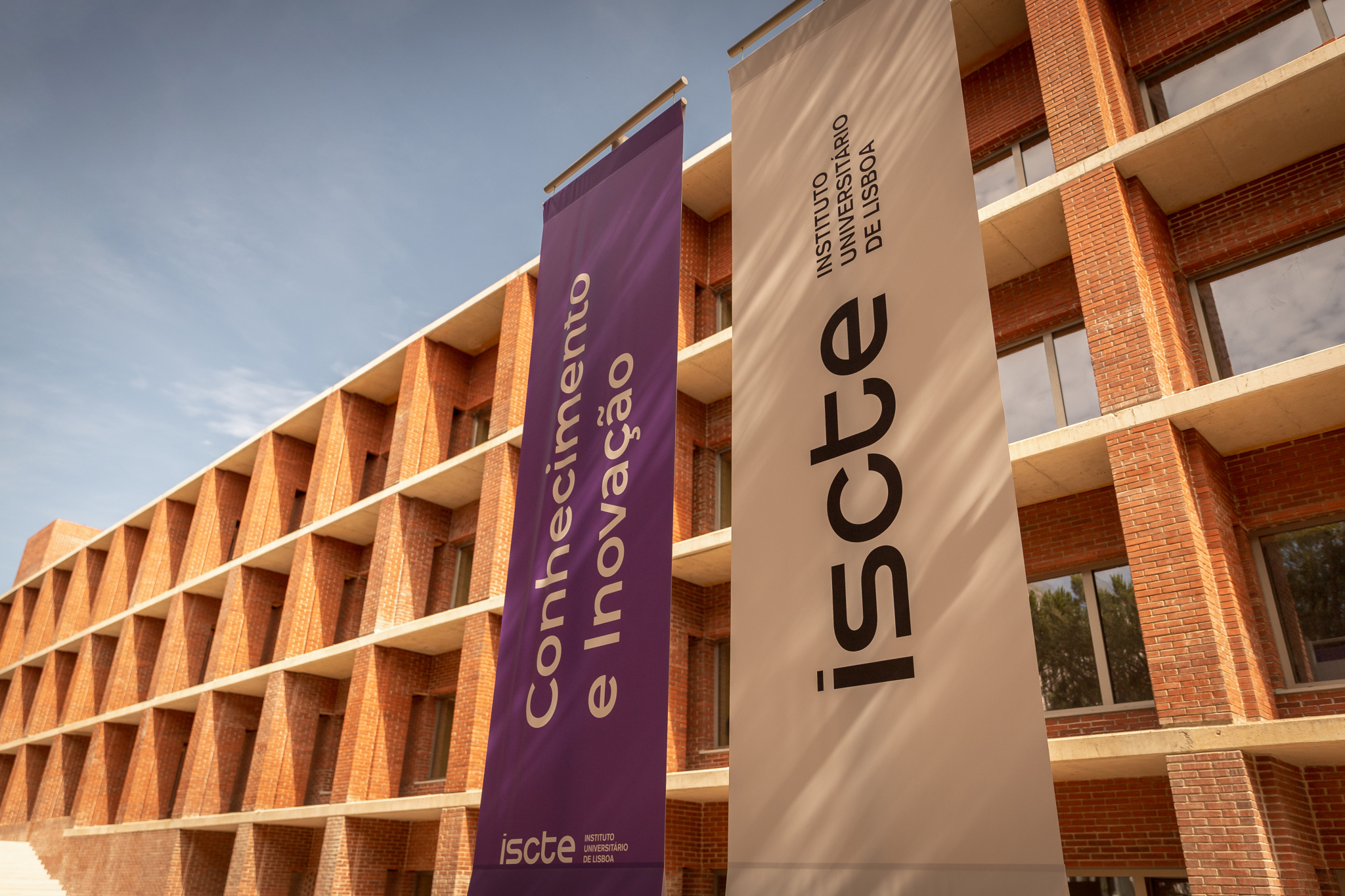
We are based in Iscte – University Institute of Lisbon, working at the Business Research Unit (BRU-Iscte).
- Modern Facilities
- Over 700 researchers
- Already over 500 publications in 2025
Want to learn more about our institution and/or research center?
Get in touch
By E-mail – sandra.costa@iscte-iul.pt
By Phone – +351 210 464 019 (BRU-Iscte’s Projects’ Manager)
Correspondence to
BRU-Iscte
Iscte – University Institute of Lisbon
Building 4 (CVTT), 1st Floor, Room 124
Avenida das Forças Armadas, 40
1649-026 Lisboa